
Key takeaways
- The three major alliances (Star Alliance, OneWorld, SkyTeam) determine which airlines you can book with miles and where awards are available.
- Star Alliance excels in Asia redemptions; OneWorld in premium transatlantic; SkyTeam in domestic and Middle East routes, each with different award costs.
- Dynamic pricing is replacing fixed award charts, making advance bookings 60-90 days out the most reliable way to lock in lower costs.
- Fuel surcharges vary widely by partner carrier and route, adding $100-$600 to business class awards regardless of which alliance you choose.
An airline alliance is a commercial agreement between carriers that lets members sell seats on each other’s flights and pool frequent flyer benefits. The three largest—Star Alliance, OneWorld, and SkyTeam—together cover most major international routes and account for roughly 60% of global scheduled flights.
For points and miles maximizers, alliances matter because they determine where you can redeem and which airlines let you transfer points. A member of American Airlines’ AAdvantage frequent flyer program can use miles on any OneWorld partner. Someone in United’s MileagePlus can book Thai Airways, Japan Airlines, or Singapore Airlines—all Star Alliance members—without leaving the program.
Star Alliance: The Largest Network
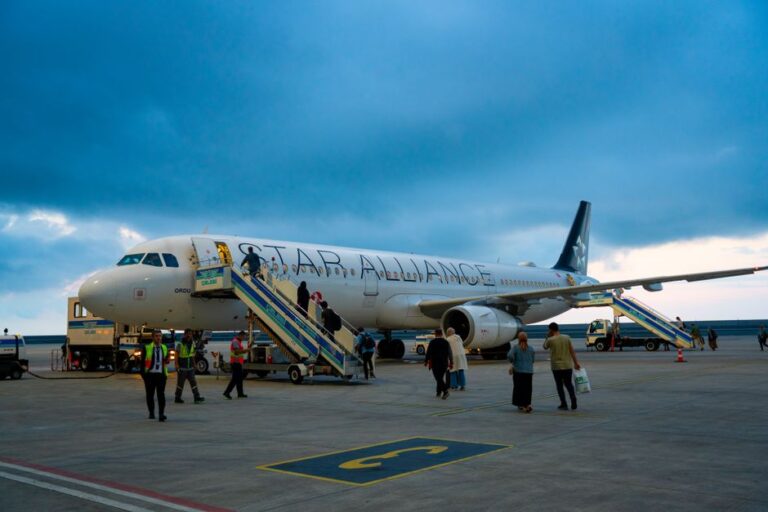
Star Alliance has 26 member carriers and reaches about 300 destinations across six continents. The lineup includes United (US), Lufthansa (Germany), All Nippon Airways (Japan), Singapore Airlines, Thai Airways, Air Canada, and Scandinavian Airlines.
The alliance’s strength is depth in Europe and Asia-Pacific. If your goal is transferring United miles to an Asian carrier, Star Alliance offers the most options. ANA and Thai Airways both publish award charts in economy and business class; economy transatlantic flights from the US on Lufthansa partners typically cost 70,000 to 80,000 miles plus fuel surcharges. Business class to Asia on Singapore Airlines or ANA ranges from 110,000 to 140,000 miles depending on route and season.
United began imposing dynamic pricing on partner awards in 2024. Award prices now fluctuate based on demand rather than a fixed chart, which means the same Tokyo route might cost 70,000 miles on a quiet Tuesday and 90,000 on peak dates. The change also expanded fuel surcharges on long-haul flights. Transatlantic business class awards now carry $200 to $400 in surcharges on top of the miles.
OneWorld and SkyTeam: Strengths and Gaps
OneWorld
OneWorld has 14 members: American Airlines, British Airways, Japan Airlines, Cathay Pacific, Qantas, and others. The alliance emphasizes premium cabins and transatlantic connectivity. Japan Airlines has a generous business class award chart at 70,000 AAdvantage miles for some Europe routes, though close-in bookings climb higher. Cathay Pacific routes are bookable via American’s program, though availability is sporadic and fuel surcharges are steep—often $300 to $600 for premium cabin awards.
OneWorld’s weakness is coverage in Africa, the Middle East, and North America domestic flights. If you’re based in the US and interested in domestic redemptions, OneWorld doesn’t compete with Star or SkyTeam.
SkyTeam
SkyTeam includes 19 members: Delta, Air France, KLM, Korean Air, China Eastern, Alitalia, and Vietnam Airlines. The alliance owns the strongest presence in France and the Netherlands through Air France-KLM and does well covering routes to Africa and the Middle East. Korean Air’s award availability is often better than Cathay Pacific’s for US-Asia routes at comparable prices, typically 70,000 to 80,000 Delta miles for economy and 120,000 to 150,000 for business.
SkyTeam’s drawback is variability in surcharge policies. Some partners impose minimal fuel surcharges; others add $400 or more per round trip. Delta’s website doesn’t always display which surcharges apply before you search a specific partner, making it harder to compare value than with United or American.
How Alliances Affect Award Availability
Airline alliances control award availability through seat inventory. Each partner airline blocks off a certain number of seats per flight for award redemptions. This allocation isn’t published, so you find out what’s available only by searching.
Peak seasons—summer for transatlantic, winter for Caribbean and Asia—see tighter award inventory across all alliances. A route that has 4 to 6 economy award seats available in February might have none in July. Booking windows vary by airline and route, but most carriers open partner awards 330 to 360 days in advance. Some, like Lufthansa, open even further for premium cabins.
Fuel surcharges are alliance-wide variations within the same carrier. Lufthansa imposes no surcharges on economy awards to Asia through United MileagePlus; Thai Airways on the same routes charges $100 to $200. The difference reflects the carrier’s fuel hedging and cost structure, not alliance policy.
Partnerships Outside the Major Alliances
Several major carriers operate independently or in smaller groupings. Southwest does not belong to any alliance but has partnerships with Alaska Airlines. Japan Airlines has full OneWorld membership but also maintains a separate partnership with Finnair. Turkish Airlines stands independent but has codeshare agreements with most carriers, allowing some cross-program transfers.
The most valuable outside partnership is Air China. Air China appears in both United MileagePlus and American AAdvantage award inventories, offering China and Southeast Asia routes without being a full member of either alliance. Award rates are often lower than alliance-wide charts because Air China runs them independently. A round-trip economy from the US to Shanghai might cost 60,000 miles when bookable via American.
Choosing an Alliance Based on Your Travel Goals
If you live on the US West Coast and fly Asia regularly, Star Alliance via United gives access to more carriers and more frequent inventory on long-haul premium cabin routes. United’s MileagePlus also carries the lowest fuel surcharges on Asian partners when booking in advance.
If Europe is your focus, OneWorld via American or SkyTeam via Delta both work. American’s direct AAdvantage transfer to British Airways and frequent flyer status benefits—free seat upgrades, lounge access on BA—edge out SkyTeam for transatlantic travelers. Delta wins if you value domestic awards; SkyTeam partners like Korean Air open better availability to Asia.
If you book short-haul or mid-range flights to Mexico, the Caribbean, or Canada, all three alliances function similarly because supply is abundant. The carrier’s surcharge policy and your elite status matter more than the alliance itself.
Recent Shifts and Emerging Practices
Award pricing is moving toward dynamic models. United implemented this system in 2024; American and Delta continue to test dynamic pricing on select routes. This shift narrows the edge of searching weeks in advance, as prices can spike quickly once inventory tightens.
Fuel surcharge trends are volatile. In 2024, most carriers raised surcharges 20 to 30% on long-haul awards. Lufthansa cut surcharges on some Asia routes in response to fuel price drops, but British Airways and Cathay Pacific maintained higher charges. The unpredictability favors booking confirmed awards 60 to 90 days out, when fuel costs are easier to estimate.
Alliances themselves are quietly consolidating. Turkish Airlines joined SkyTeam in 2023, expanding the alliance’s Middle East footprint. China Eastern’s role in SkyTeam has deepened despite geopolitical tensions. These shifts are slow, but they affect which carriers offer the best value within each program over time.
Frequently Asked Questions
Can I use my United miles on Delta flights?
No. United MileagePlus is Star Alliance. You can only book Star partners like Lufthansa, ANA, and Thai Airways. Delta is SkyTeam and only accepts its own miles.
Which alliance has the cheapest business class awards to Europe?
Prices vary by partner carrier and season. Star Alliance typically charges $200-400 in surcharges; OneWorld carriers like British Airways add $300-600. Booking 60-90 days out usually locks in lower prices before dynamic pricing spikes demand.
Do airline alliances change which carriers join?
Yes, but slowly. Turkish Airlines joined SkyTeam in 2023. Changes take years to complete and affect award availability, transfer partners, and the value of holding each program's card or status.
